
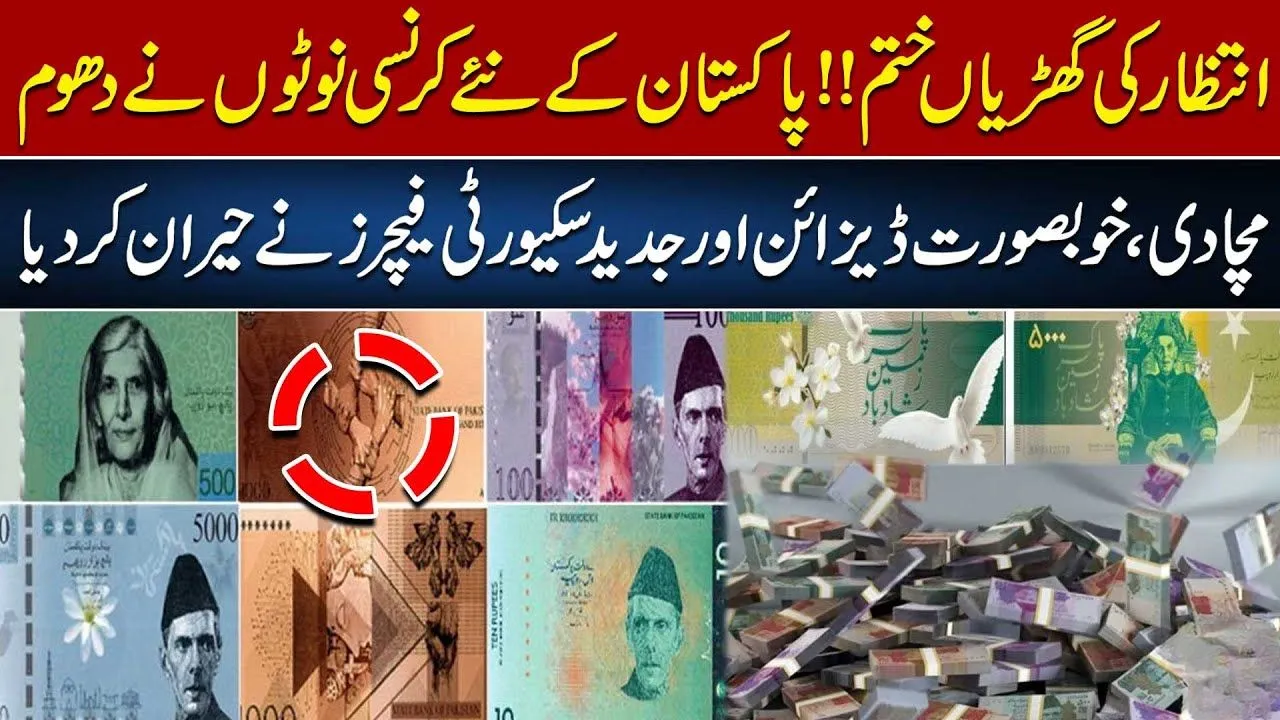
Pakistan is set to introduce newly redesigned currency notes in 2026 as part of a major effort to modernize the country’s monetary system and curb counterfeiting. The federal government has crossed an important milestone by formally approving the printing of several new banknote denominations, marking the most significant currency redesign in decades.
Federal Cabinet Approves New Banknotes
On January 14, 2026, the federal cabinet, chaired by Prime Minister Shehbaz Sharif, reviewed the progress of the currency redesign project and granted formal approval for the printing of four redesigned banknotes. Following this decision, a special cabinet committee has been established to finalize the artwork, themes, and advanced security features before mass production begins.
Officials say the redesign aligns with international standards and reflects Pakistan’s evolving economic and social identity.
Which Currency Notes Are Being Redesigned?
The 2026 redesign focuses on the most widely used denominations across the country:
- Rs. 100
- Rs. 500
- Rs. 1,000
- Rs. 5,000
Importantly, the approval confirms that the Rs. 5,000 note will continue, putting an end to rumors suggesting it might be discontinued.
Although designs for Rs. 10, Rs. 20, and Rs. 50 were part of the State Bank of Pakistan’s (SBP) design competition held in 2024, the current cabinet approval is limited to the four higher denominations due to their heavy circulation.
Why Pakistan Is Redesigning Its Currency
According to officials, the primary objective of the redesign is enhanced security. Counterfeit currency remains a challenge for the economy, and the new notes are expected to significantly reduce this risk.
Key planned improvements include:
- Advanced security threads embedded within the notes
- Multi-layered watermarks that are harder to replicate
- Specialized inks visible only under ultraviolet (UV) light
These features are designed to meet modern anti-counterfeiting standards used by leading central banks worldwide.
Polymer Notes Under Consideration
The State Bank of Pakistan has also indicated that polymer (plastic) banknotes are under active consideration. If approved, Pakistan would join a growing list of countries using polymer currency, which offers several advantages:
- Longer lifespan than paper notes
- Greater resistance to wear, moisture, and dirt
- Increased difficulty for counterfeiters
However, a final decision on polymer versus traditional paper notes is still pending.
New Themes Reflecting Modern Pakistan
Beyond security, the redesigned notes aim to visually represent Pakistan’s national story. Proposed themes include:
- Pakistan’s geographical diversity
- Historical landmarks and cultural heritage
- The role of women in national development
- Climate change awareness and environmental responsibility
Officials say the artwork will reflect a forward-looking Pakistan while preserving its historical identity.
Expected Timeline for New Currency Notes
| Stage | Estimated Timeframe |
| Final design approval | Q1 2026 (ongoing) |
| Start of printing | Mid-2026 |
| Public circulation | Late 2026 |
What Happens to Old Currency Notes?
The SBP has issued a clear clarification: existing currency notes will not become invalid immediately. The transition will be gradual, with both old and new designs circulating together for several years.
This phased approach is intended to avoid disruption, ensure public convenience, and give banks and businesses enough time to adapt.
What This Means for the Public
For now, Pakistanis can continue using existing notes without concern. Once the new currency enters circulation later in 2026, banks and ATMs will gradually introduce the redesigned notes, while older series will be slowly withdrawn over time.
Further updates are expected as the cabinet committee finalizes designs and security specifications in the coming months.
Stay tuned for official announcements from the State Bank of Pakistan as the 2026 currency redesign moves closer to public release.